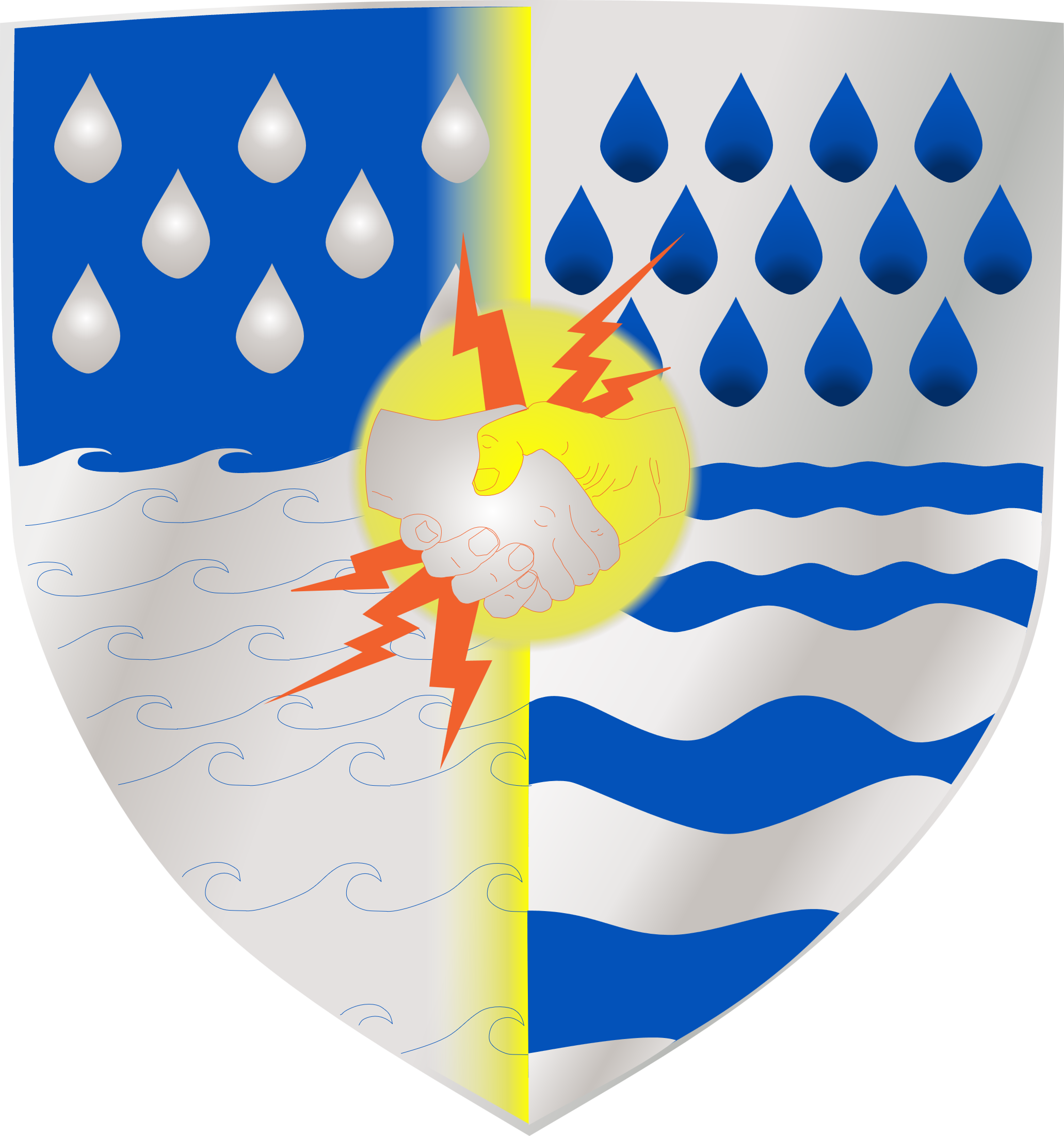
The thumbnails on the right are an art memorial to the recovery efforts for past flood events.
Resources

Below is a list of tools and databases supporting flood risk management along with hyperlinks to their websites. Hyperlinks to the websites are mostly in the acronym following each name.
Useful webpages from agencies in the U.S.

- Federal Flood Risk Management Resources. This is a concentration of most of the federal programs, services, data and tools available to support flood risk management activities.
- U.S. Army Corps of Engineers (USACE weblink)
- Planning Toolbox. The Planning community of practice is the gateway to Corps’ implementation and follows processes required to analyze possible cost sharing for large infrastructure projects.
- USACE National Flood Risk Management Program. Initial guidance (2009): Foster open and collaborative mitigation planning with the public, watershed, federal, state, local, tribal, and territorial partners.
- USACE Silver Jackets Program. Regionally led teams, including states, tribes, and territories that facilitate collaborative solutions for natural hazards.
- 2025 Poster Exhibit. A show case of 43 posters summarizing key aspects of interagency projects.
- Kansas Silver Jackets, Kansas Hazard Mitigation Team
- Missouri Silver Jackets, State Risk Management Team
- National Nonstructural Committee (NNC)
- Engineering with Nature
- Hydrologic Engineering Center (HEC)
- Free software for hydrologic and hydraulic modeling
- FEMA’s Future Flood Risk Data Initiative
- National Inventory of Dams (NID)
- National Levee Database (NLD)
- National Structures Inventory (NSI). This website supports collaboration on flood risks for buildings by providing access to point-based structure inventories with attribution to support evaluation of consequences from natural and man-made hazards.
- Climate awareness tools supported by USACE supporting infrastructure resilience
- USACE Climate Action Plan, February 21, 2023
- Comprehensive Hydrology Assessment Tool (CHAT). This climate hydrology assessment algorithm/website provides a useful tool for evaluating possible measures to enhance future resilience.
- Sea Level Analysis Tool (SLAT). This climate tool provides useful analysis for the coastal storm damage reduction.
- Time Series Toolbox (TST). This website aids in facilitating better understanding of data, including tests for trend detection, change point analysis, breakpoint analysis, and time series modeling.
- Infrastructure and Installation Resilience Community of Practice (IIR)
- USACE Kansas City District, Public Service Announcement written by Brian Rast, on relationships between FRM measures like dams and levees to flood insurance, Partnering for Flood Resilience, delivered by Travis Rayfield, former Commander (retired).
- Institute for Water Resources (IWR)
- USACE IWR Collaboration and Public Participation Center of Expertise (CPCX)
- Federal Emergency Management Agency (FEMA)
- Building Codes Toolkit for Homeowners and Occupants
- National Flood Insurance Program (NFIP)
- NFIP FloodSmart
- NFIP Flood Insurance, policy premium quote
- NFIP Community Rating System (CRS)
- Map Service Center (MSC)
- Flood Mitigation Assistance Swift Current (FMA-SC) funding
- Hazard Mitigation Assistance Loss Avoidance Study Summaries
- Mitigation Best Practices
- Risk MAP Best Practices
- Environmental Protection Agency (EPA)
- Natural Resources Conservation Service (NRCS)
- Emergency Watershed Protection (EWP)
- Watershed Programs
- Soil Health Management Systems (SHMS)
- National Oceanic and Atmospheric Administration (NOAA)
- Billion Dollar Weather and Climate Disasters
- National Water Prediction Service (NWPS)
- Flood Forecast Inundation Mapping
- National Weather Service (NWS)
- NWS alerts, including Flood Watches and Warnings
- Turn Around Don’t Drown
- Flood Forecast Inundation Mapping sites (Wildcat Creek FFIM example)
- US Geological Survey
- National Hydrologic Dataset (NHD)
- National Streamgaging Network (NSN)
Useful webpages from state agencies

- Iowa Flood Center (university supported)
- North Carolina Flood Mapping Program
Useful webpages from universities

- University of Colorado, Natural Hazards Center (NHC)
- University of Georgia, Resilient and Sustainable Systems, Dr. Todd Bridges
- University of Kansas, resisting long-term risk from disasters, Dr. Ward Lyles
- University of Oklahoma, Network for Engineering with Nature (NEWN)
Useful webpages from organizations
Most of these, if not all, are U.S.-based 501(c)(3) nonprofit research and technology organization.

- National Hazard Mitigation Association (NHMA)
- International Code Council, Digital Codes, I-Codes, resources (ICC)
- Floodplain Management Association (FMA)
- Association of State Floodplain Managers (ASFPM)
- National Association of Flood and Stormwater Management Agencies (NAFSMA)
- National Emergency Management Agency (NEMA)
- Flood Mitigation Industry Association (FMIA)
- American Flood Coalition (AFC)
- Partnership and Community Collaboration Academy
- Training Course, Managing By Network
- The Nature Conservancy
- Anthropocene Alliance (A2)
- International Association of Structural Movers (IASM)
- Insurance for Good. Harnessing risk transfer for the common good.
- InnSure. Developing insurance solutions recognizing the total cost of risk.
- First Street Foundation quantifies and communicates property-level climate risk—such as flooding, wildfire, wind, and extreme heat—using peer‑reviewed, physics‑based models.
Documentaries

- Public Broadcasting System (PBS), Nova, Episode: Rain Bombs
- Public Broadcasting System (PBS), Nova, Episode: Super Floods
- Watershed resilience has significant overlap with flood risk management. Several eye-opening documentaries share concepts of regenerative agriculture, soil health, and rain infiltration, which on a watershed-level support resilience as one of many tools possible for FRM in a basin. These concepts address both climate adaptation and climate mitigation.
- Beginning in the first on the benefits of regenerative agriculture versus Industrial Agriculture, Kiss the Ground.
- In the sequel, desertification can be combated and reversed with regenerative agriculture, Common Ground.
- Third in the trilogy, in 2026, this film presents the significant momentum of examples of farmers adopting regenerative agriculture, because they realize Industrial Agriculture does not lead where a sustainable future requires. And, infiltrates more rainfall while absorbing carbon into the soil, Groundswell.
Private Industry and Other Content Creators

- Grady Hillhouse, Practical Engineering, provides insightful videos on YouTube in civil engineering and flood disasters.
- Mike Morrison, PhD, Poster 2.0, #BetterPoster. He offers valuable pointers on how we can improve our cross-sector networking with a poster scheme at conferences so we can do risk communication, risk avoidance, and risk transfer, among any field of science.
- Bob Jacobsen, webpage, is an author with 45 years of experience addressing complex challenges facing our rivers and coasts with a passion for innovation in risk-based decisions.
Past Flood Events and Some Lessons Learned

- Missouri River Flood of 1993, Sharing the Challenge (aka The Galloway Report)
- Hurricane Katrina and New Orleans,
- Interagency Performance Evaluation Task Force (IPET), all technical reports
- Twenty Years After Katrina–Ten Fundamental Flood Ri$k Lessons We Must Finish Learning, Louisianna Civil Engineer (2025)
- 2011 Mississippi River & Tributaries System, Room for the River
- Hurricane Sandy, Risk and Resilience Hub, Looking Back at Lessons Learned From Hurricane Sandy
- 2019 Missouri River flood, NPR article, The Midwest Battles Historic Floods In The Aftermath Of ‘Bomb Cyclone’
Books Worth Reading

- Living with Nature’s Extremes: The Life of Gilbert Fowler White, Robert Hinshaw
- Rising Tide: The Great Mississippi Flood of 1927 and How It Changed America, John M. Barry
- High & Rising: The 1951 Kansas City Flood, Brian Burnes
- Disasters by Design, Dennis Mileti
- Red River Rising: The Anatomy of a Flood and the Survival of an American City, Ashley Shelby
- Battling the Inland Sea, Robert Kelley
- Divine Providence: The 2011 Flood in the Mississippi River & Tributaries Project, Charles Camillo
- Leading at the Edge: Leadership Lessons from the Extraordinary Saga of Shackleton’s Antarctic Expedition, Dennis N.T. Perkins
- Big Muddy Blues: The True Tales and Twisted Politics Along Lewis and Clark’s Missouri River, Bill Lambrecht
- Disaster Resilience: A National Imperative, The National Academies
- A World Without Soil: The Past, Present, and Precarious Future of the Earth Beneath Our Feet, Jo Handelsman
- The Infinite Game, Simon Synek
- Supercommunicators: How To Unlock the Secret Language of Connection, Charles Duhigg
- Way Beyond Bigness: The Need for a Watershed Architecture, Derek Hoeferlin
- Understanding Disaster Insurance: New Tools for a More Resilient Future, Carolyn Kousky


