Time for a Change
The Rising Costs of Disasters
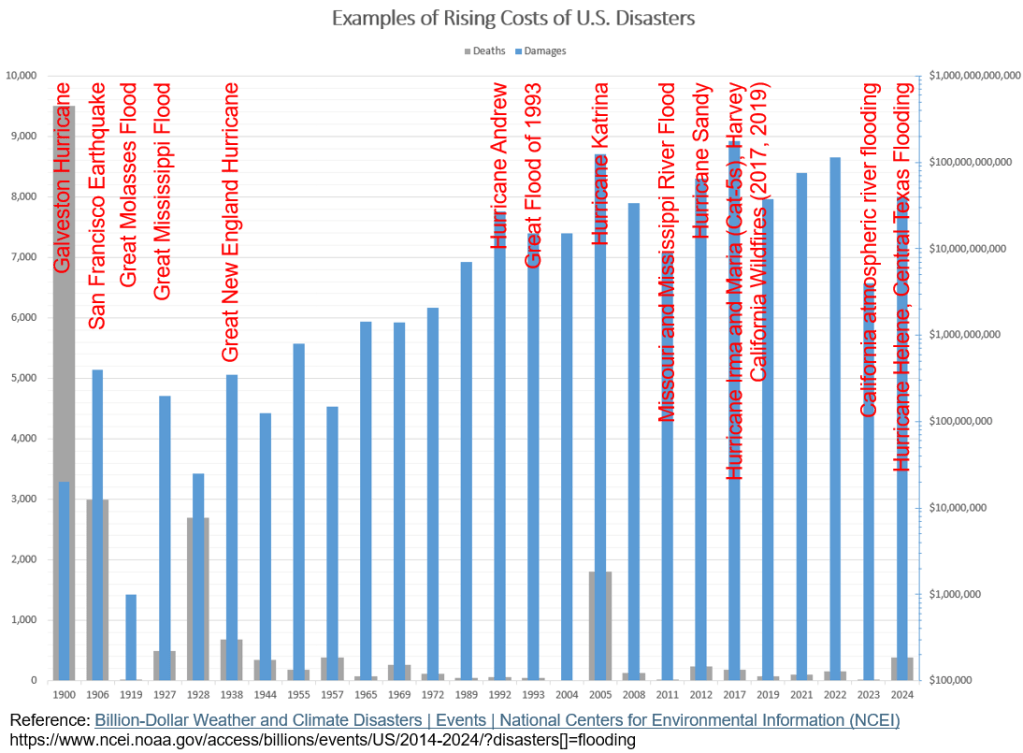
Looking at the impact of various flooding disasters, we can see a disturbing trend for the flood hazards in the United States. While loss of life has a lowering trend, the trend line for flood damages costs are rising into the tens-of-billions of dollars.
What’s up with the weather?
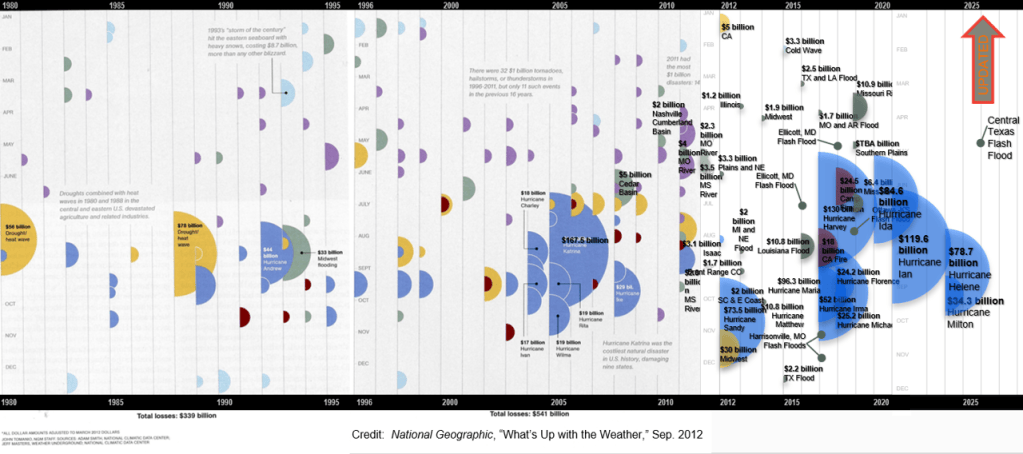
The September 2012 issue of National Geographic had this question on the cover. Using the data from NOAA’s webpage, we can see that the continuing trend of flood related disasters is significant. Hurricanes, bomb cyclones, and rain bombs are occurring on a more frequent basis. Between 1980 and 1995, losses were $339 billion, and between 1996 and 2011, $541 billion. Then, with just flooding disasters showing in the updated graphic, below, we see escalating expansion and frequency in the costs.
Do we have the tools?
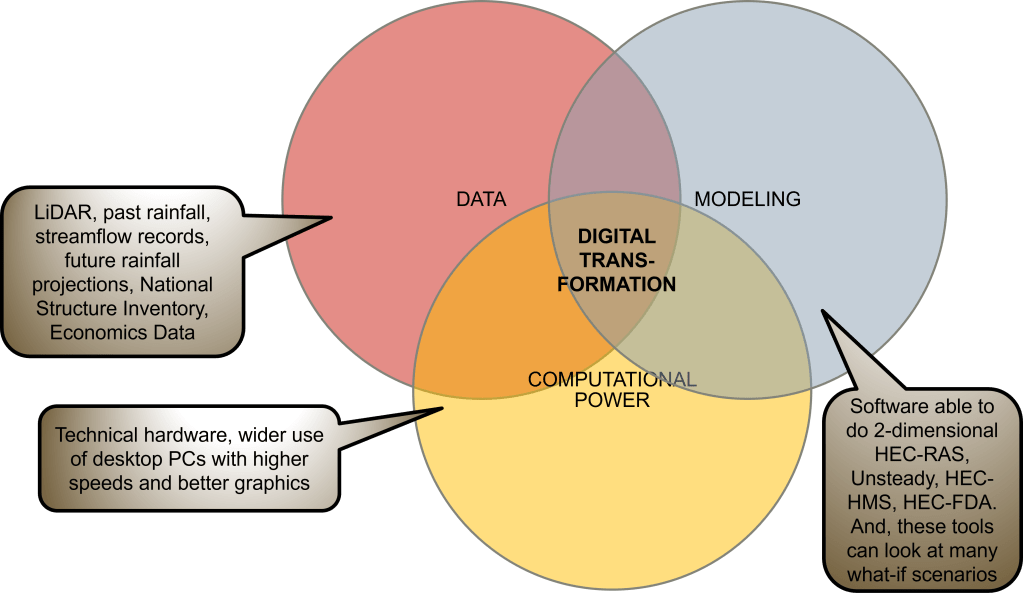
Data, Algorithms, and Computation Power
Flood risk management has had advancements in all three.
In the book, The Digital Mindset, the authors Paul Leonardi and Tsedal Neeley, describes what it takes to thrive in an age where these three things have advanced. A digital mindset is the set of approaches we use to make sense of data and technology. The mindset means we are redefining fundamental ways of approaching collaboration, computation, and change. The field of flood risk management can use this.
We have seen great strides in the data, the software, and the hardware. We need to apply these advancements to the rising consequences of floods, and agencies are advancing this using the cloud. However, the growing historic flood damages suggests we have something holding our communities back.
With all the digital transformation in these 3 areas,
Why are we not more resilient?
When we look at the history of flood risk management in the context of this digital transformation, we see acceleration in technology. With a bit of thought, we might conclude: We should be further along on flood mitigation. We need to get at the heart of what is holding us back.
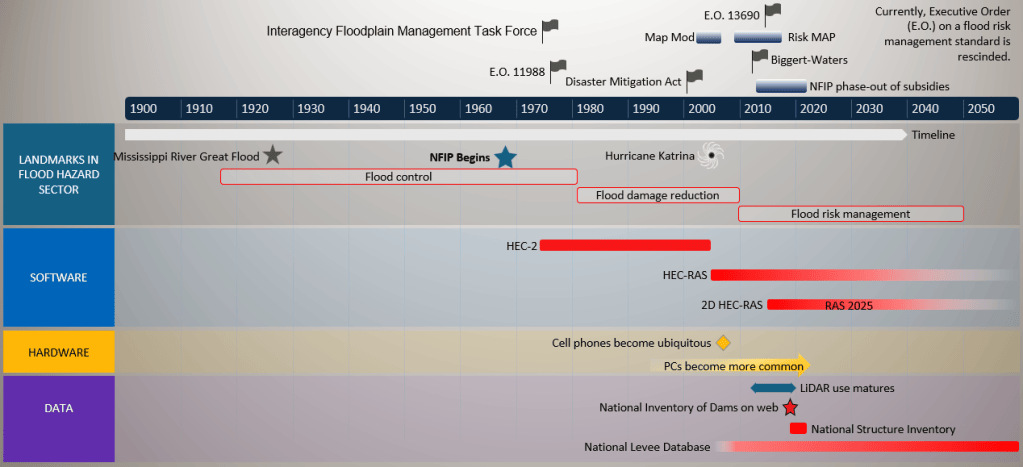
Hurricane Katrina and the levee failures impacted USACE and FEMA. The event caused a cultural shift, and we are still seeing the growth of risk management in the agencies. USACE has continued advancing databases on risk, like the National Levee Database. And in 2022, the National Structure Inventory has become a great resource to prioritize actions. FEMA communicates avidly in new ways, such as looking at flood risk during the period of a homeowner’s mortgage. The agencies use a systems approach, including watershed planning. We have had some success.
What else needs to be done?
“The digital mindset means we are redefining fundamental ways of approaching collaboration, computation, and change.”
Paul Leonardi and Tsedal Neeley
The digital mindset we have had is not enough. We need the mindset to affect change in flood risk management. We need to collaborate more in better cross-sector partnerships, and we need to collaborate with the public, engaging them in ways that help them understand the possible measures. We have state teams collaborating now, but we need to change the intensity and how we do this work. We need innovative partnerships between those doing economic development plans and those hazard mitigation planners and floodplain managers that get stuck recovering from disasters. Because of this need to redefine our ways of planning, this website is here to help make the way forward easier and to make these advancements real.

