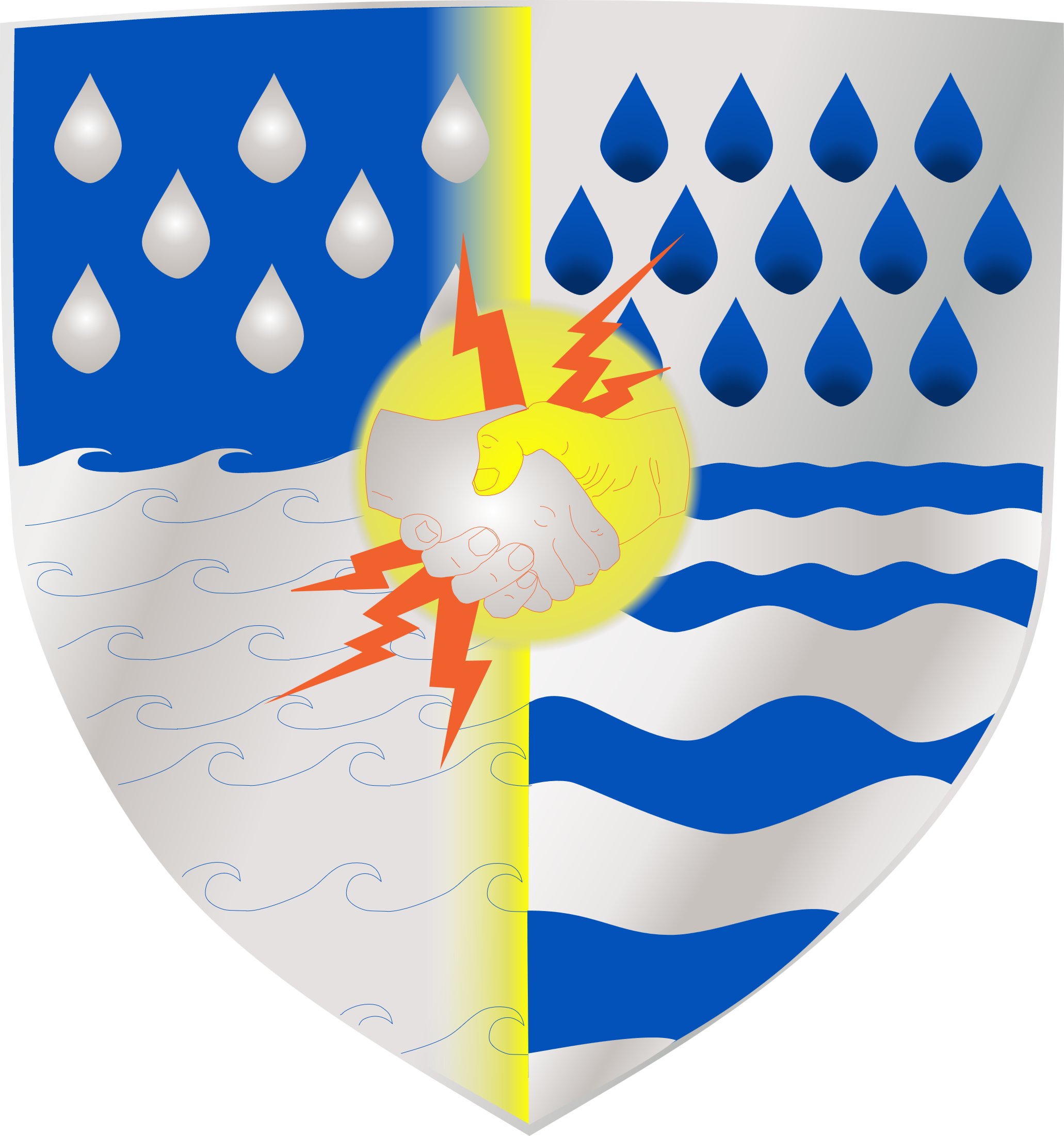
At the heart of our Nation’s flood problems is one question. I think it’s an ownership problem that is going to continue to eat away at any hope we have for flood resilience: Who owns the risk? Or very specifically, who owns the flood risk? This question prompts an important dialogue for partners that are ready to address the consequences of flooding before the next disaster. It’s in our future and theirs.
The ownership problem is a valid question, because flood risk management is a shared responsibility. The shared responsibility may occur at these levels:
• Individual
• Community
• State agency
• Federal
Furthermore, at each of these levels are multiple facets regarding ownership, making interrelationships between stakeholders more complex, upon a closer look. Let’s zoom in closer to understand the owning problem.
Individuals can include homeowners, a business, a developer, and even a pedestrian. Each addresses a flood with differing values, various levels of impact, and various abilities during recovery. Homeowners, businesses, developers, and pedestrians are some of the individuals that own flood risk.
The pedestrian has the most to lose in terms of cost in dollars and loss of life while traveling about. A pedestrian can stay on hills and ridges but is at risk of drowning, when fording a creek or river. They may find driving on an overtopping road acceptable in terms of possible damage to a car, but they’re much quicker to avoid the floodwater when without a car and loss of life is likely. Relatively, if they have flood damage to their car, they’re very likely, especially in hard economic times, to have a bigger hit to their assets, than a business. Pedestrians can own flood risk.
A business owner in the floodplain owns the flood risk on their property. A business may be so large, a flood only impacts part of their operations. A regional farming business may have assets on hills and in valleys, but if large enough, their diverse portfolio of crops and animals can be resilient to flooding. However, a small business owner that is unaware of the flood inundation areas has a high risk. Businesses can own flood risk.
Homeowners, and potential homeowners, are in an interesting situation in the United States, if in the floodplain. By law, they are frequently not allowed to see a record of past flood claims (damages) when working with their realtor, unless the lending institution requires it. Federally backed loans require flood insurance. Privacy laws prohibit realtors and the public from pulling the property’s historical FEMA National Flood Insurance Program records. Meanwhile, federally backed lenders legally enforce the mandate to purchase flood insurance only after determining the property sits in a designated Special Flood Hazard Area (SFHA). They very likely were not aware of the flood risk, before buying, because laws obscure the flood losses on the property they bought, until they own it. Even in this ignorance, the unfortunate reality means after they buy, the homeowner owns the flood risk, too.
Developers, another aspect at this Individual level, are worth discussing. Developers are basically not held responsible for flooding for a subdivision created within the floodplain, because they usually operate within the boundaries of local government zoning approvals, building permits, and engineered drainage designs. One design criteria that is widely used is American Public Works Association’s standards for stormwater design, Section 5600. Under U.S. law, if a developer builds exactly what the local community approved, liability shifts away from them. Thus legally, compliance with the existing code shields them. The developer can avoid corporate liability too, because developers frequently establish a temporary Limited Liability Corporation (LLC), which, after the last lot is sold, is legally dissolved. A major gap in consumer protection exists in the flood/developer/lender nexus: Lenders only verify if a property is currently inside a SFHA to mandate insurance, they do not require or share whether that specific plot of land has ever flooded. For a short time, during design and approvals, developers also own flood risk.
This moves the buck to the local community. If the city or county signs off on design plans and certifies that the buildings and lots meet the 1% AEP (poorly called the 100-year) base flood elevation (BFE) standard, the developer has met their legal duty of care. Local governments want an growing tax base, so they’re hesitant about any further perverse economic incentive tied to a higher standard. Banning floodplain development is not in the community’s financial interest, since subdivisions generate substantial property tax revenue and stimulate local economic growth. Historically, cities are founded close to water sources, like rivers, so we see a conundrum. Anyways, up to a point the local community owns flood risk, as well.
Who owns the risk? Who determines what’s safe? Some homeowners, if they took time to understand the continuum of flood risk, may decide a 1% annual exceedance probability (AEP), defining the SFHA, is not what they want to use for the duration of their mortgage. Using probability and math, if the mortgage is a 30-year term, then for the 1% AEP, they have a 1 in 4 chance of a bad flood in the neighborhood, which may not get to their finished floor. The flood level may be a foot below it, if a community has a more progressive standard, which could be in a 1-foot freeboard ordinance. The big problem is these climate standards for the rainfall are changing dramatically, so that 0.2% AEP may hit them and be more likely. We see evidence of this now for several years.
Homeowners, businesses, developers, and pedestrians own flood risk. Individuals and communities can own flood risk. You see the situation now between homeowners and developers. Developers…they often move on. At some point, we need the public to be more interested in the “infinite game” (previous blog), that is, having and keeping a thriving community. Along floodplains and coastlines, developers seem to get to “pass the buck.” The public needs to stand up for themselves. Or seek help and find others who will stand up for them.
Passing the Buck
How quick we are to “Pass the Buck.” Shifting flood risk responsibility. In practice, effective flood risk management requires clear ownership of risk. “Passing the buck” leaves communities exposed and vulnerable. In flood risk terms, “pass the buck” means shifting responsibility for dealing with flooding to another party.
Here is some interesting background on the origin of this idiom. The idiom pass the buck comes from poker, where a “buck” (a marker) was passed to the next player if someone didn’t want to deal. In modern usage, it means attributing one’s own responsibility to someone else. In a flooding context, “passing the buck” occurs with these exclamations:
• A private developer says, “The city will fix the drainage,” avoiding its own site‑specific flood controls.
• A local government says, “The state will handle the flood response,” while the local agency avoids funding or implementing mitigation measures.
• A state says, “The federal government should manage the flood,” avoiding its own infrastructure investments.
In 2026, the federal government says not anymore: They’re pushing the buck back to the states.
Here, we see the apparent effort to avoid responsibility for the risk of flooding. Regardless of the consequences of flooding. They ignore the risk of flooding. The risk is not “owned” by the party making the statement. Instead, that party is trying to avoid bearing the cost, liability, operational burden, or loss of life. Another entity is expected to address the problem. This is leading to too many issues. Property owners that buy or rent don’t know this risk. Many other problems follow, like gaps in preparedness, delayed action, and increased vulnerability.
The Buck Stops Here
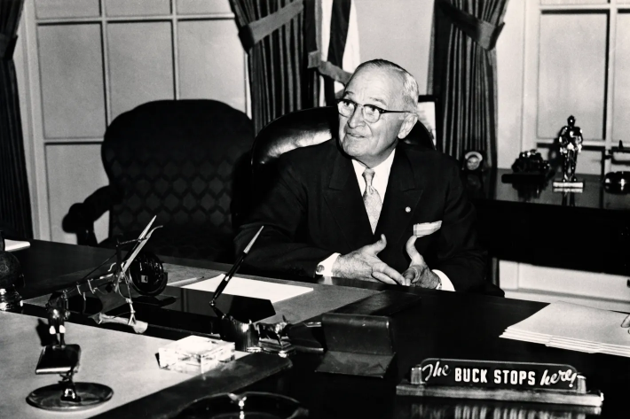
In Missouri, President Truman said, “The buck stops here.” This means accepting full responsibility for managing and bearing the consequences of flooding. The phrase “the buck stops here” was popularized by President Truman as a declaration that the leader must make the decision and accept the ultimate responsibility for its consequences. Total Flood Risk Management is committed to pursuing flood risk management leadership.
In flood risk terms, “the buck stops here” means: The responsible authority (a governor, mayor, or agency head) owns the risk. Meaning they are accountable for ensuring flood mitigation, emergency response, recovery, and preferably reaching flood resilience. They cannot shift the burden to another government, agency, or private party without clear legal or contractual basis. They must commit resources, coordinate actions, and accept the political and financial consequences of flood events. For example, if a mayor says “the buck stops here” during a flood, they are signaling that they will ensure the city’s flood defenses, emergency plans, and recovery efforts are in place, and that they will be held accountable if those fail. Is it too far a reach for leadership to commit to resilience?
Ownership of Flood Risk
Risk is not owned by the party shifting blame. Risk ownership is deferred to another, potentially creating uncertainty and inefficiency. Compromising a community’s ability to thrive. Subjecting the taxpayers to unnecessary costs. Developers make money in the floodplain or along the coastline, and they are not around when the disaster happens. Engineers design dams, channels, and levees, which can reduce the flood risk but cannot eliminate it. Planners approving designs in those floodplains and along those coastlines are probably gone when these severe floods hit. Elected officials are either unaware of the residual risk levels, or they are afraid to risk losing votes for their re-election. So we continue to see no one own the risk, as development continues happening right up to that line in the sand at the edge of the SFHA.
Risk is owned by the party making the statement, “the buck stops here,” if they are the ultimate decision‑maker and accountable for outcomes. I do not believe we’ll ever hear anyone say that. In practice, effective flood risk management requires clear ownership of risk, rather than “passing the buck,” which is leaving communities exposed and vulnerable.
The buck stops here: If we continue to not address who owns the flood risk problem, our Nation will continue moving away from resilience. True leaders will communicate flood risk and are willing to say the buck stops here. They’ll take time to educate the public, the vulnerable population groups, and those hearing it now and needing to hear it in the future. Most importantly, these true leaders are willing to coach all those involved in land development before they commit to an investment.
Total Flood Risk Management is committed to pursuing flood risk management leadership and this topic of owning the flood risk. In upcoming articles, readers will get views on why zoning and stronger building codes are part of making the buck stop here.


Leave a comment